Secret techniques that are passed down on Miyajima.
Woodturning and the beauty of working by hand.
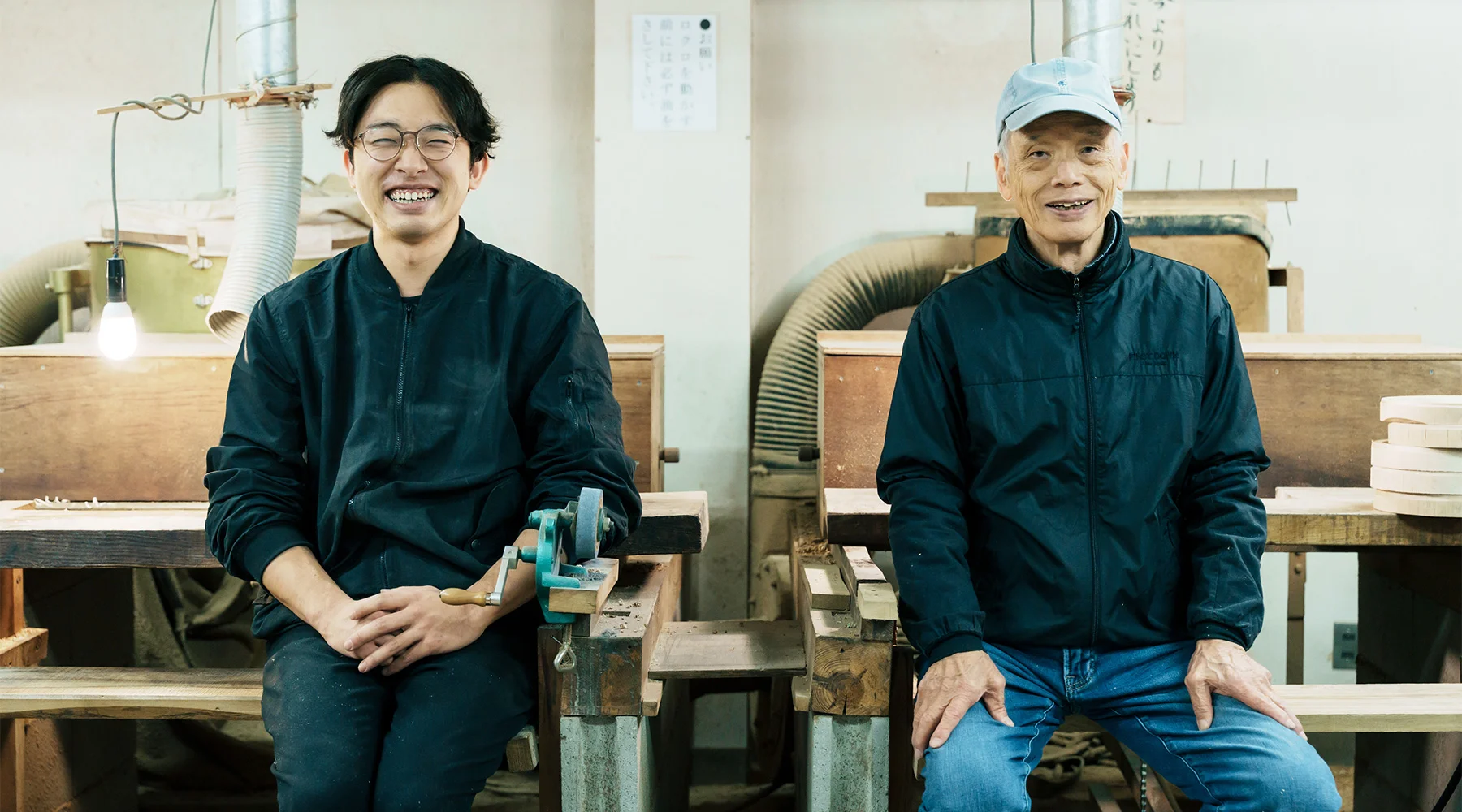
Woodcrafts such as rice scoops, woodturning, and Miyajima-bori carvings made on Miyajima are known as "Miyajima crafts." In 1982, they were designated as traditional crafts by the Japanese government. They are said to have been derived from the techniques of the miyadaiku carpenters who were involved in the reconstruction of Itsukushima Shrine. Despite the decline in successors, master of traditional crafts Mr. Satoru Fujimoto and his apprentice Mr. Yusuke Shimomura continue their activities while upholding tradition. We asked them about their feelings on the techniques living on Miyajima, passing down those techniques, and their attempts to pursue new forms of expression.
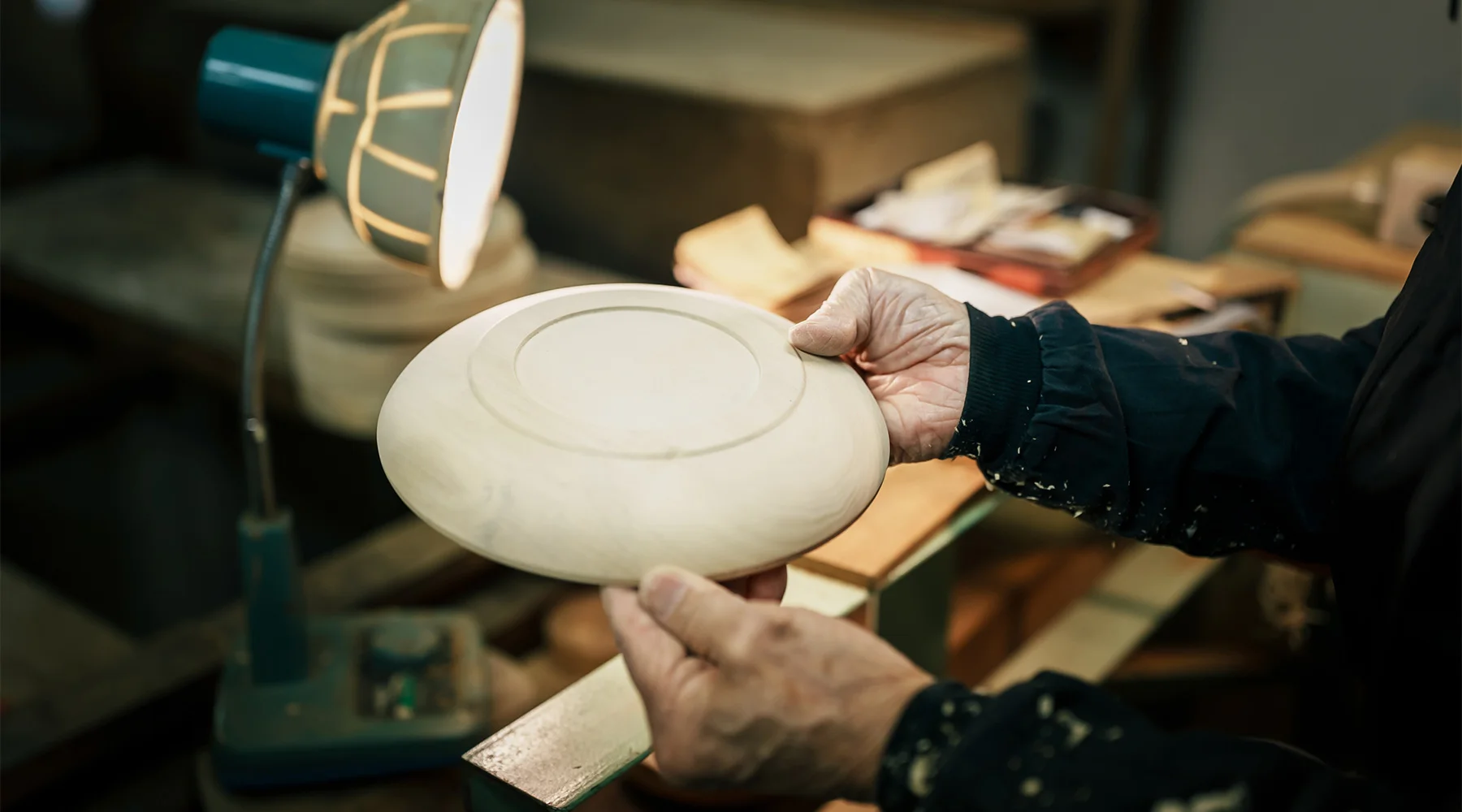
A perfectly circular shape carved from wood.
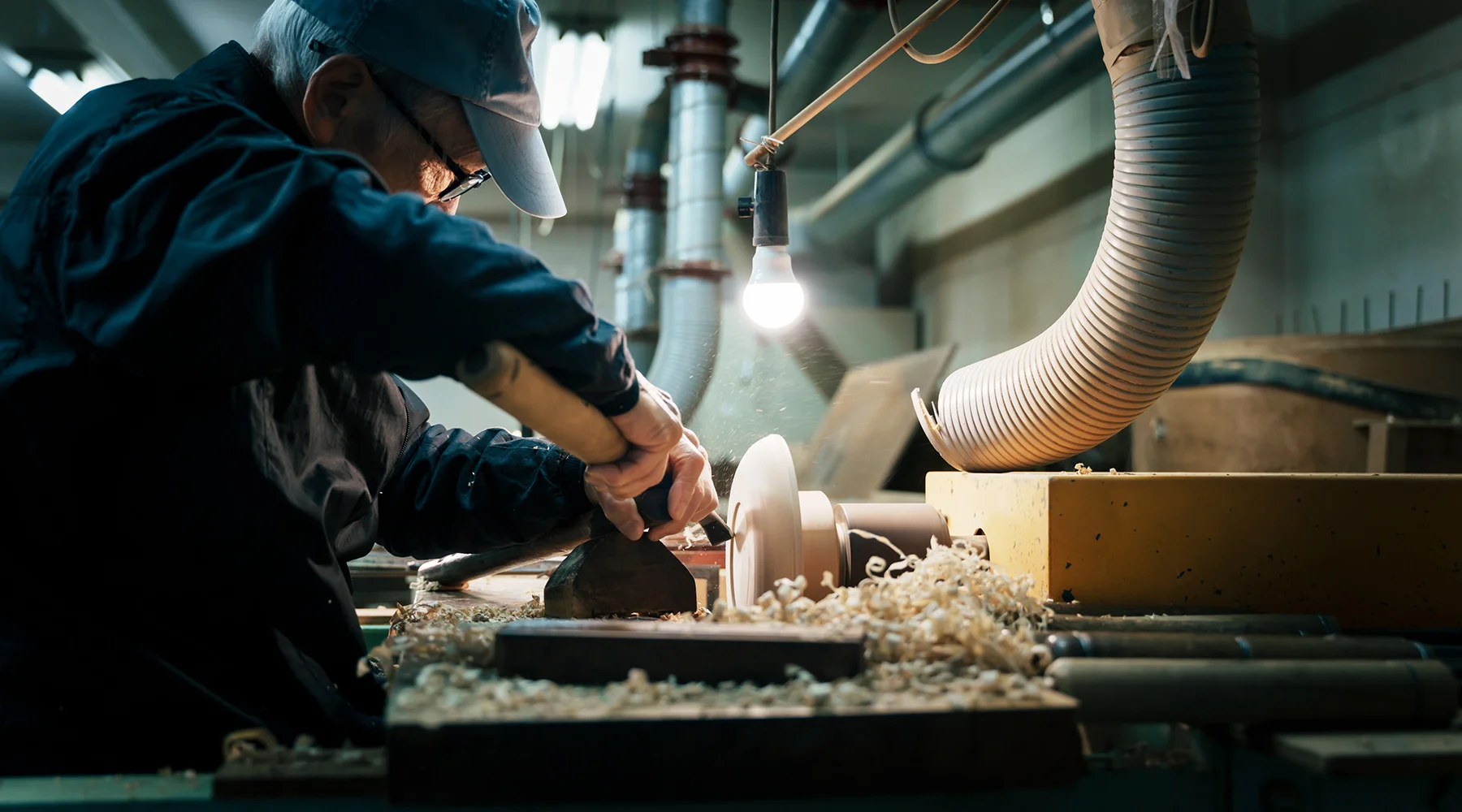
Miyajima woodturning is said to have originated during the Kaei era (1848 to 1853) in the late Edo period, when Kikkawaya Sahe from the island turned thick wooden plates for soup ladles. After that, Oda Gonroku installed a two-person lathe at his workshop and, together with his apprentice, began full-scale production of items such as board trays, confectionery containers, and teacup saucers. In the mid-Meiji era, the lathe was improved from a hand-cranked style to a foot-operated mechanism, which made it possible for artisans to produce large trays and similar items alone. The peak lasted from the late Meiji era to the Taisho era, and it is said that there were more than 250 woodturning artisans at that time.
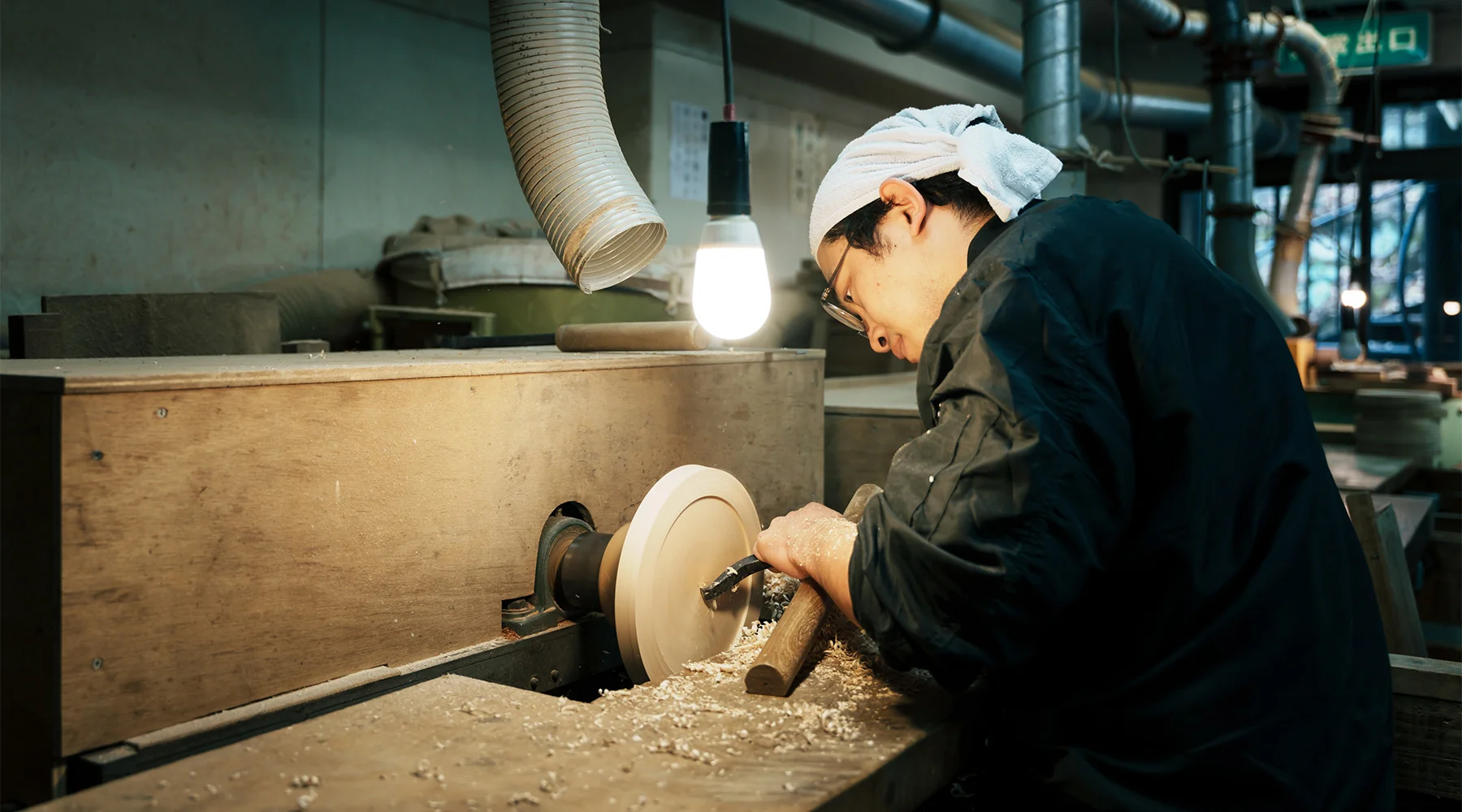
"I graduated from a junior high school in Yamaguchi Prefecture and came to Miyajima aiming to become an artisan. That was around 1955. There are only a few workshops left now, but at that time, there were 11 on the island. I apprenticed under Mr. Ryoichi Murakami of Murakami Kogei. He was a wonderful person who treated me warmly like family and respected my independence," says Mr. Satoru Fujimoto as he reflects on long career of 68 years.
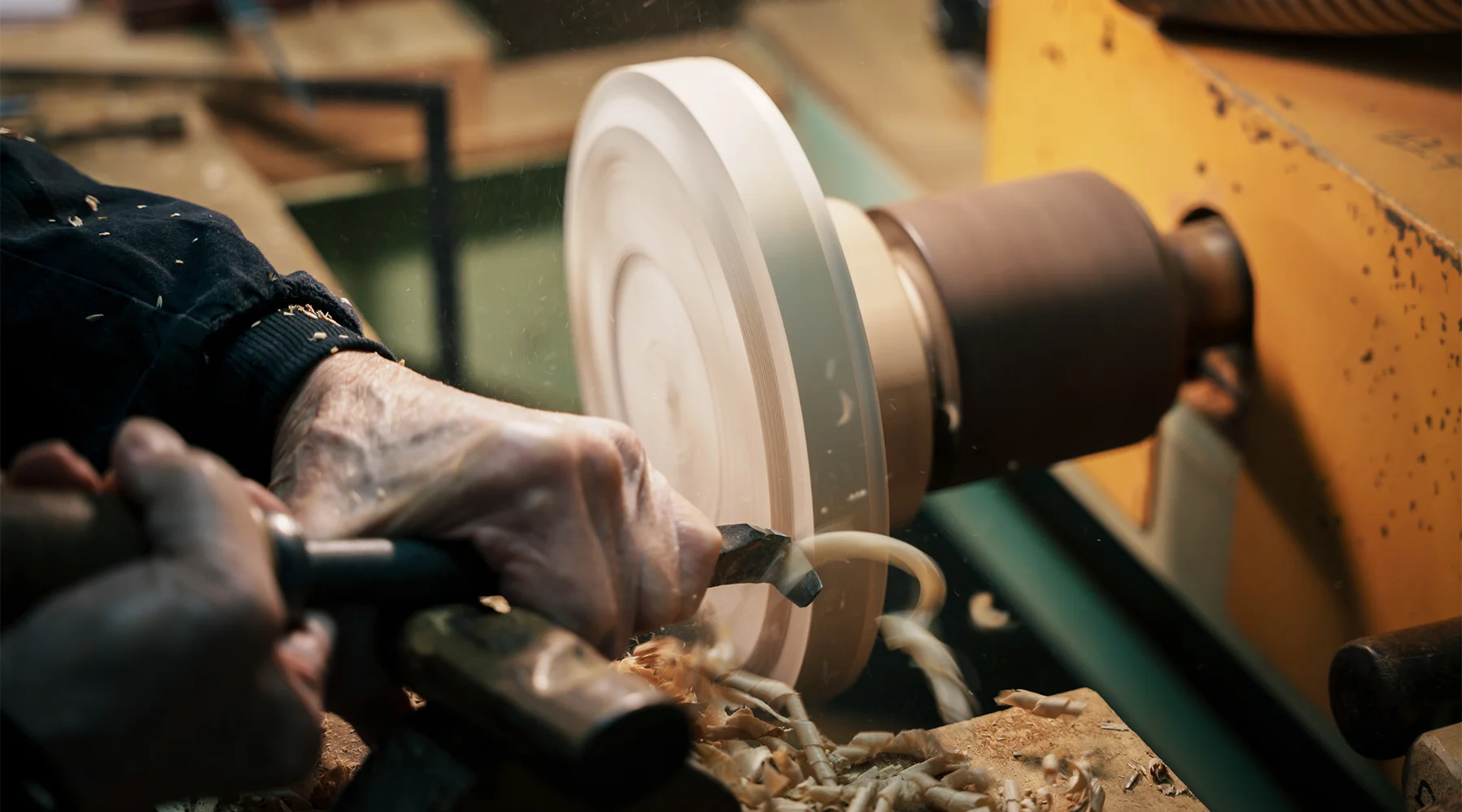
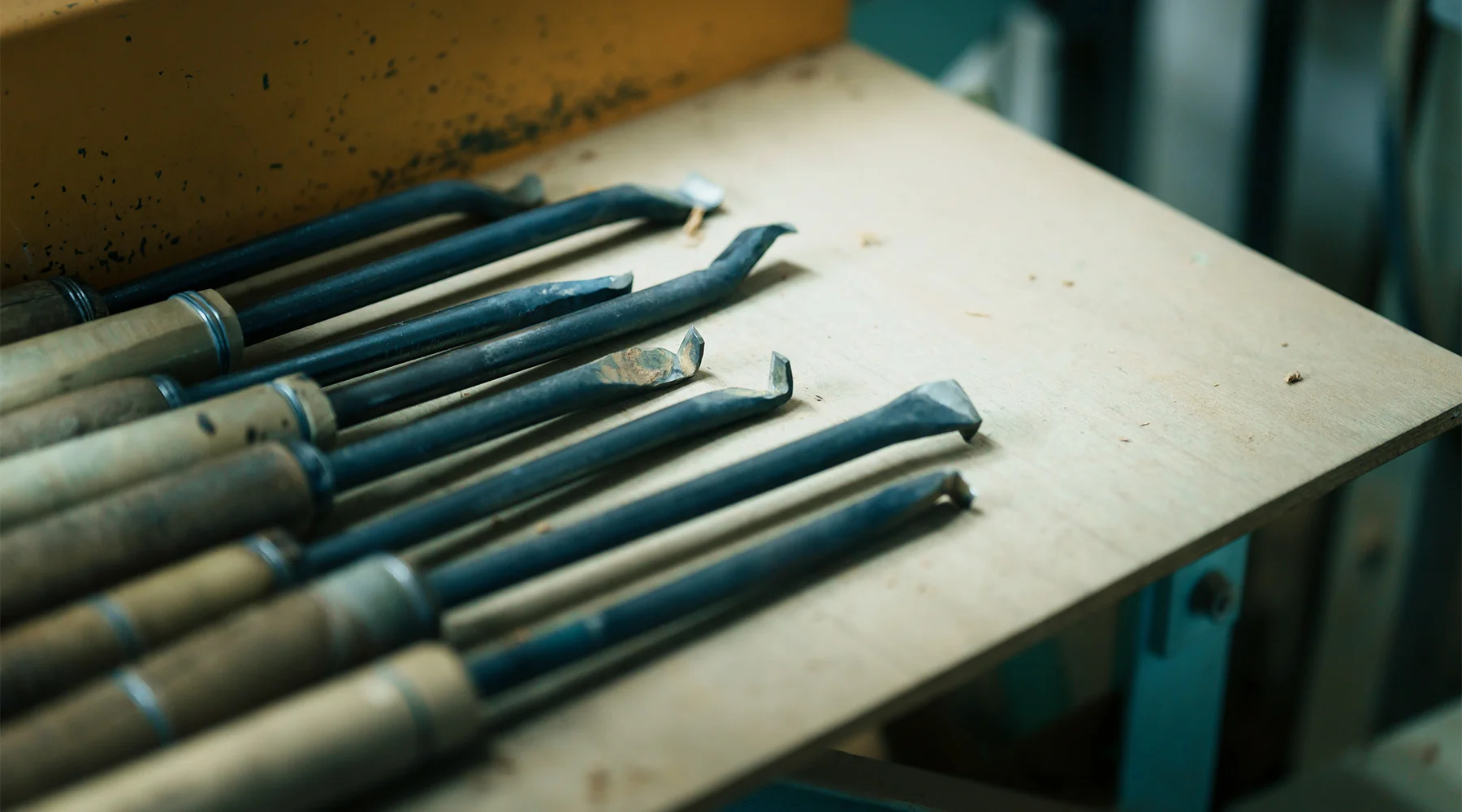
Mount the wood material on the lathe, rotate it, and shave it with a plane. While it has become speedier with the invention of the motorized lathe, Mr. Fujimoto simply describes this traditional technique as "very interesting." He skillfully handles the blade to carve out a smooth circle with flawless precision- it is a captivating scene you cannot help but watch. The base material created in this way is also provided to the "Miyajima-bori" artisans, who elevate it into new works of Miyajima crafts.
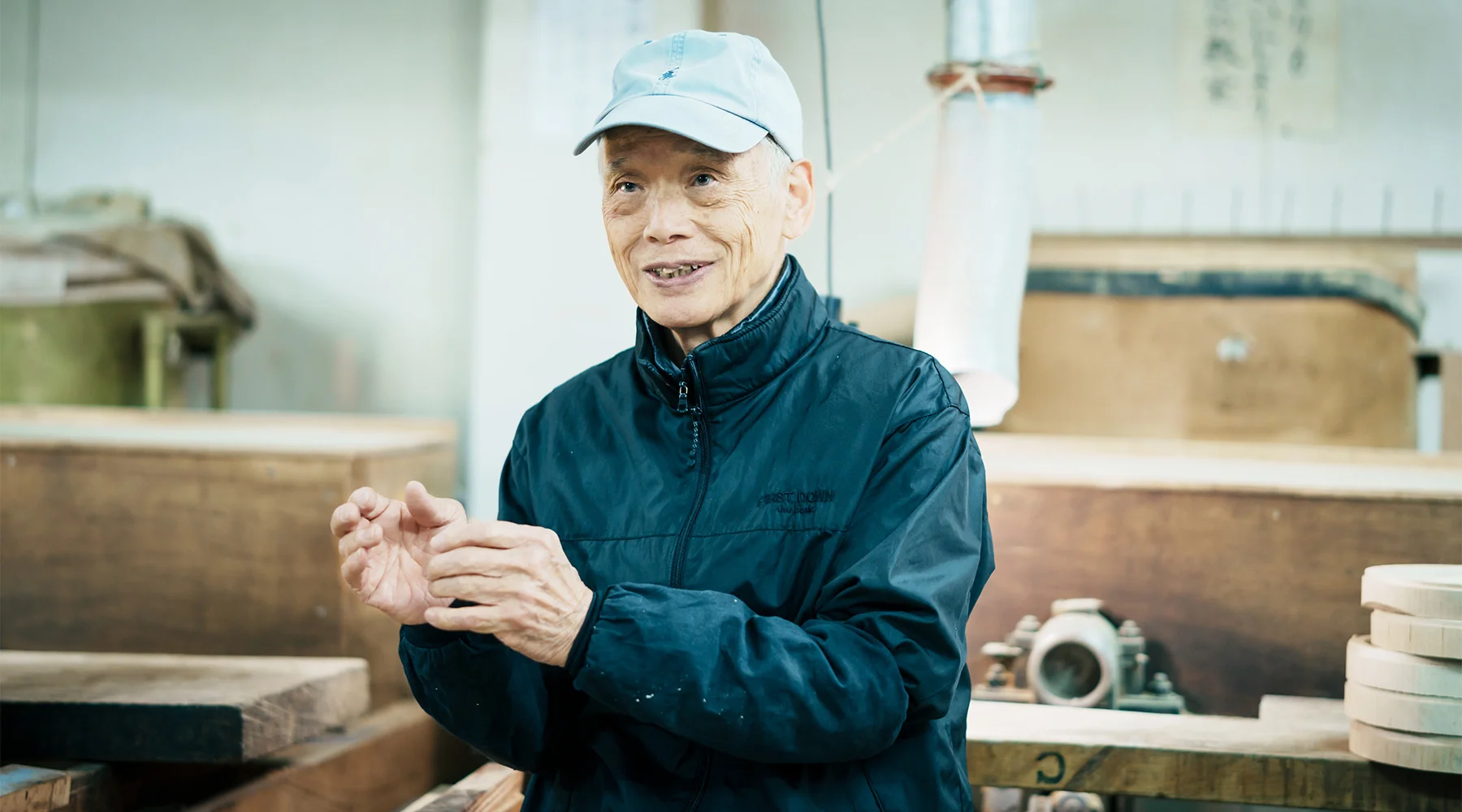
In 2009, he received the Order of the Sacred Treasure,
Silver Rays. He had an audience with the Emperor of Japan at the Imperial Palace.
"I want Miyajima crafts to be as widely known as Itsukushima Shrine."
Settling down on Miyajima and engaging in traditional crafts.
Following in Mr. Fujimoto's footsteps is Mr. Yusuke Shimomura, who entered this industry in 2017. He held an admiration for artisans and wanted to work in manufacturing, so after finishing senior high school in Mie Prefecture, he entered the Department of Arts at Hiroshima City University. It was there that he met Mr. Fujimoto, who was teaching woodturning classes as a part-time instructor.
"The woodturning apprenticeship started from our junior year, but I was so interested that I began visiting the workshop from my sophomore year. However, my teacher (Mr. Fujimoto) told me plainly from the start that it would be difficult to make a living solely by creating artwork."
With that in mind, after completing graduate school, Mr. Shimomura began his training while also working as a part-time senior high school teacher. For the past two years, he has continued creating works as a "Community Supporter for Traditional Craft Inheritance" (a unique position in Hatsukaichi City utilizing the Ministry of Internal Affairs and Communications' "Community-Reactivating Cooperator Squad" system). His term has one year remaining. With the goal of eventually becoming independent, in 2025, he took over the workshop and store of a former artisan and relocated to Miyajima.
"There is no one else who would stake their life on coming to Miyajima and making a living through woodturning. I truly consider him my apprentice, and I want to pass on all the skills I possess to him," says Mr. Fujimoto. Breaking into a smile at his master's words, Mr. Shimomura describes the appeal of Miyajima woodturning that has captivated him so much, saying, "There are many gritty and difficult tasks, like making the blades before carving the wood. But that's actually what makes it interesting. I get completely absorbed." Furthermore, since setting up base on Miyajima, he feels the joy of "creating at the original home," and even believes that value has been added to his works. He has also developed a sense of pride as one of the artisans bringing excitement to Miyajima.
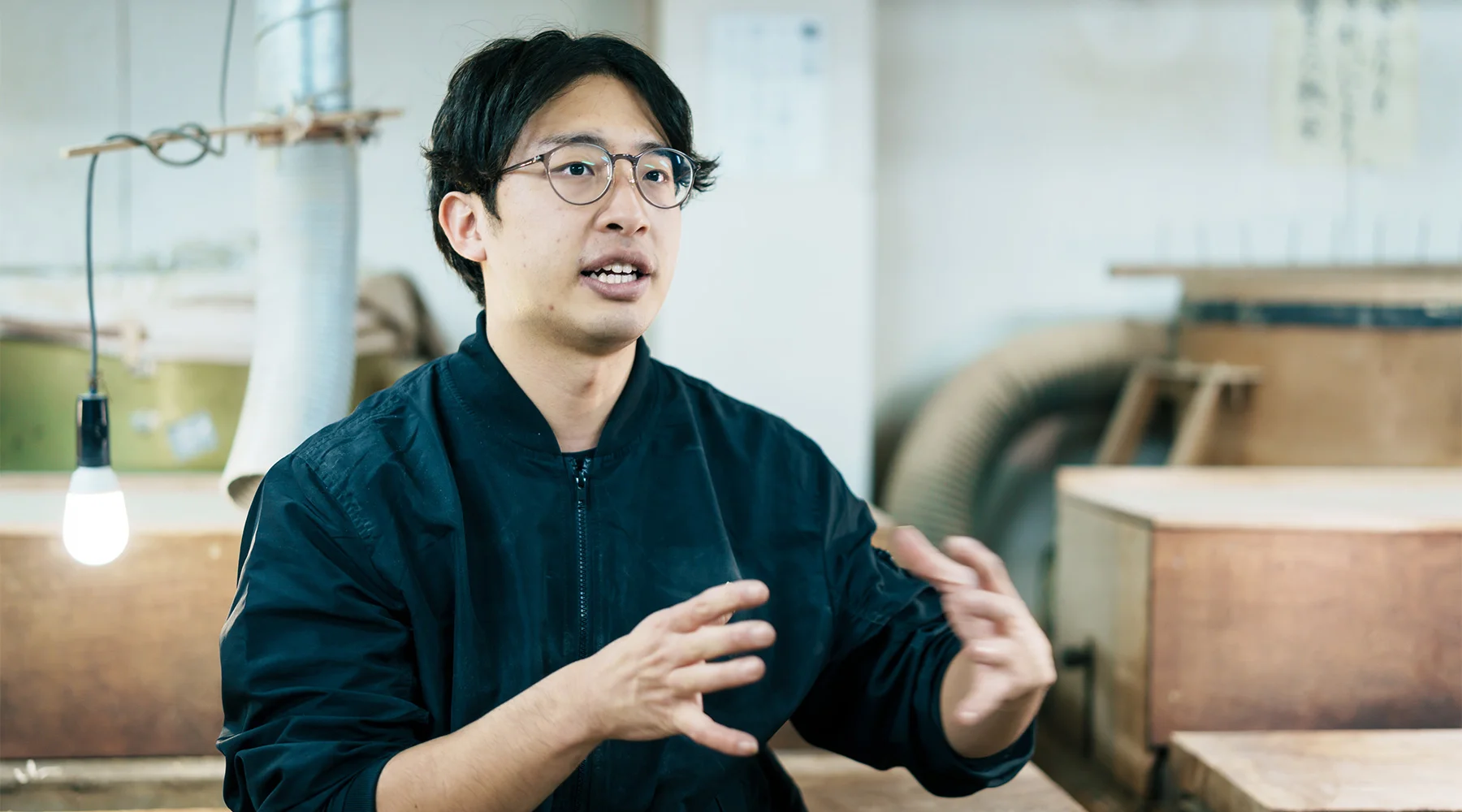
"I've come to feel the joy of creating at the original home."
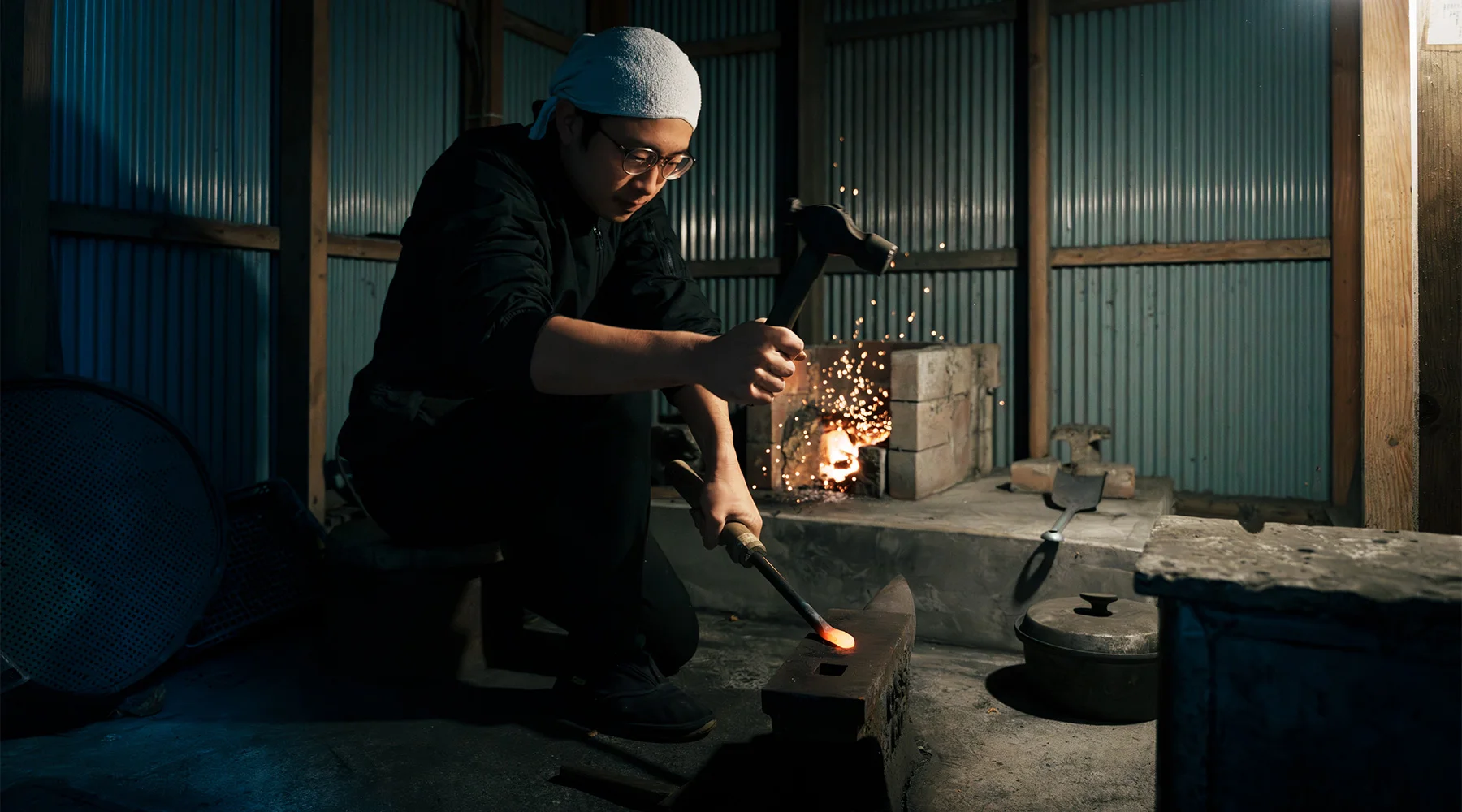
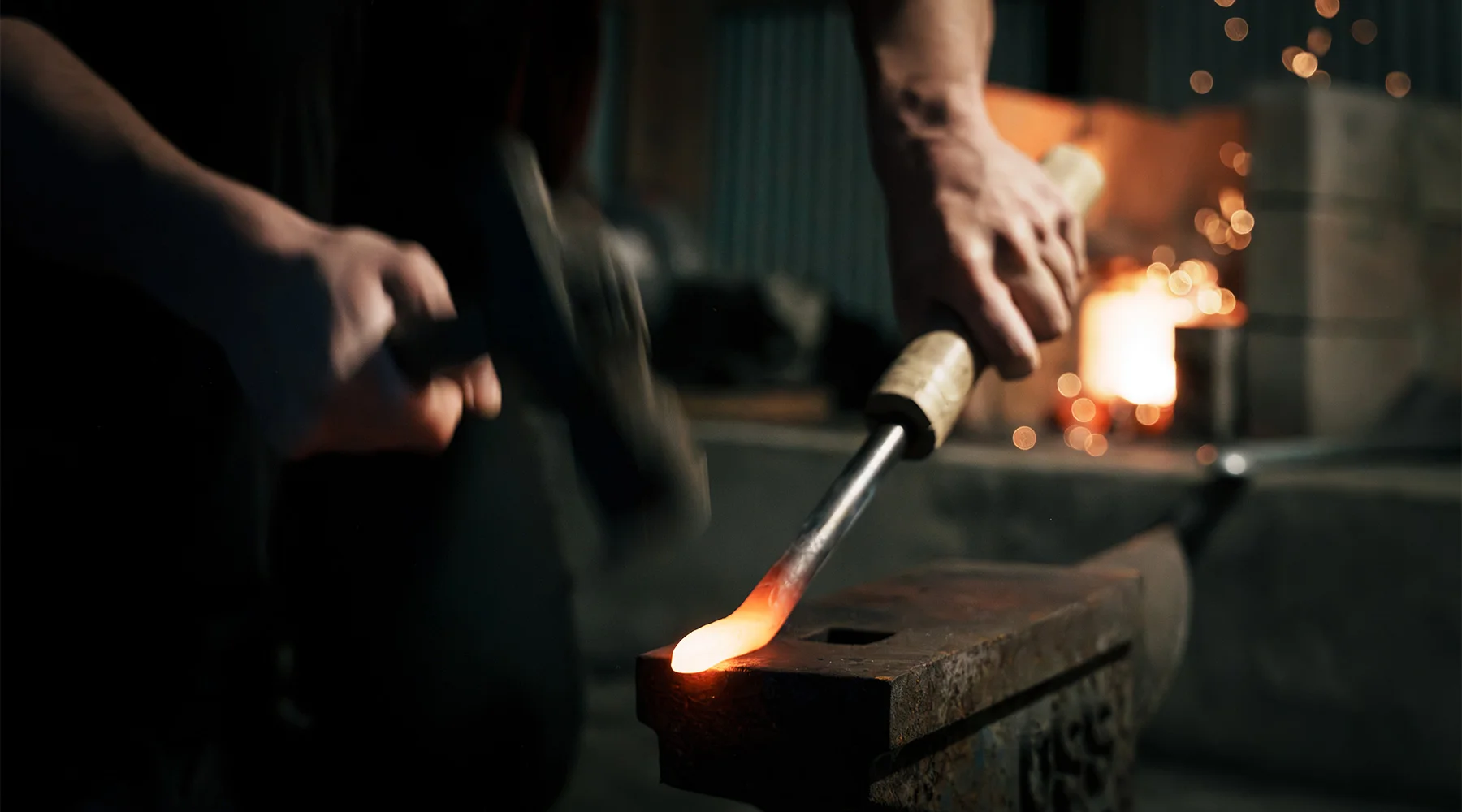
It's a difficult task with no clear answer.
Aiming to spread the appeal of Miyajima woodturning through new
forms of expression.
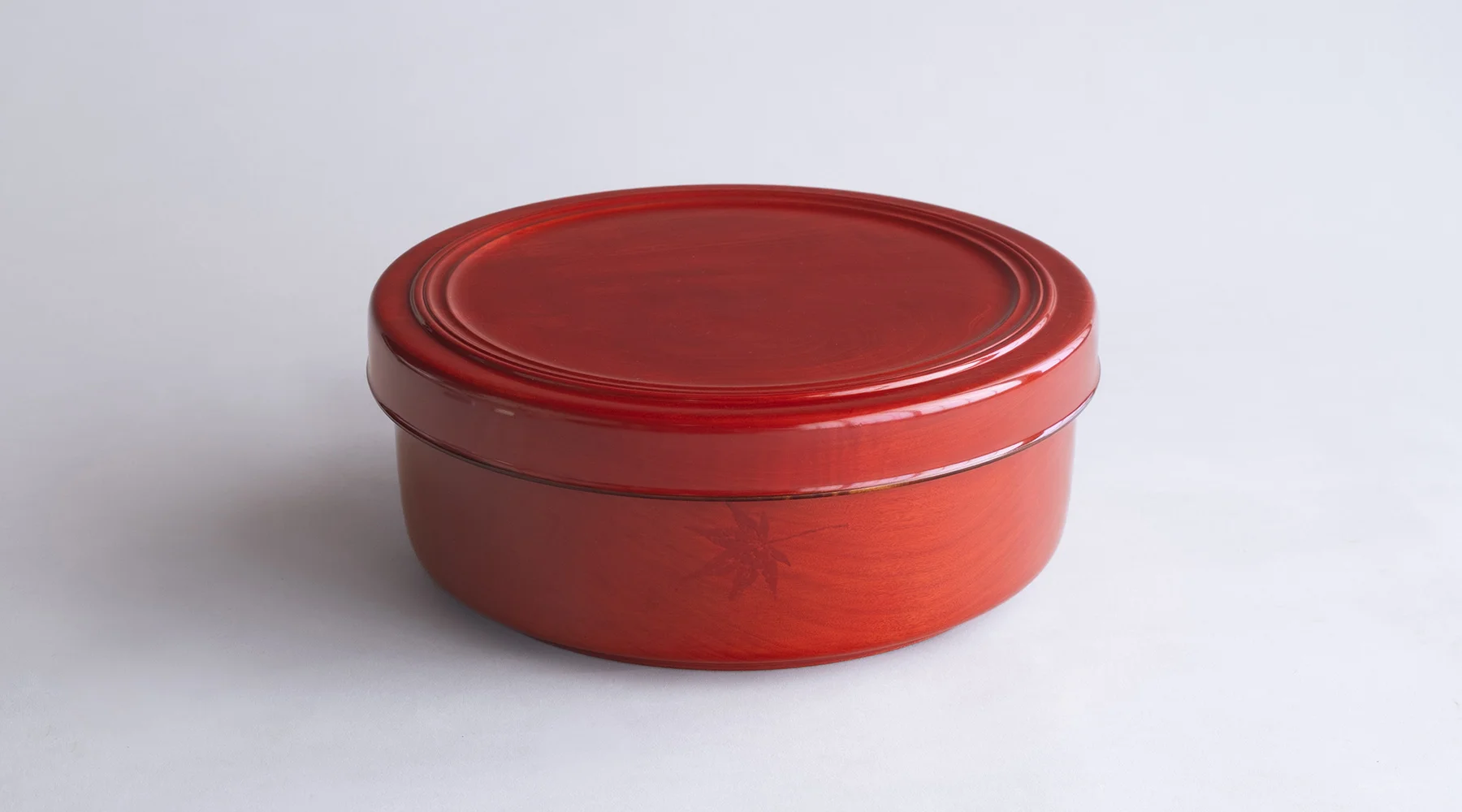
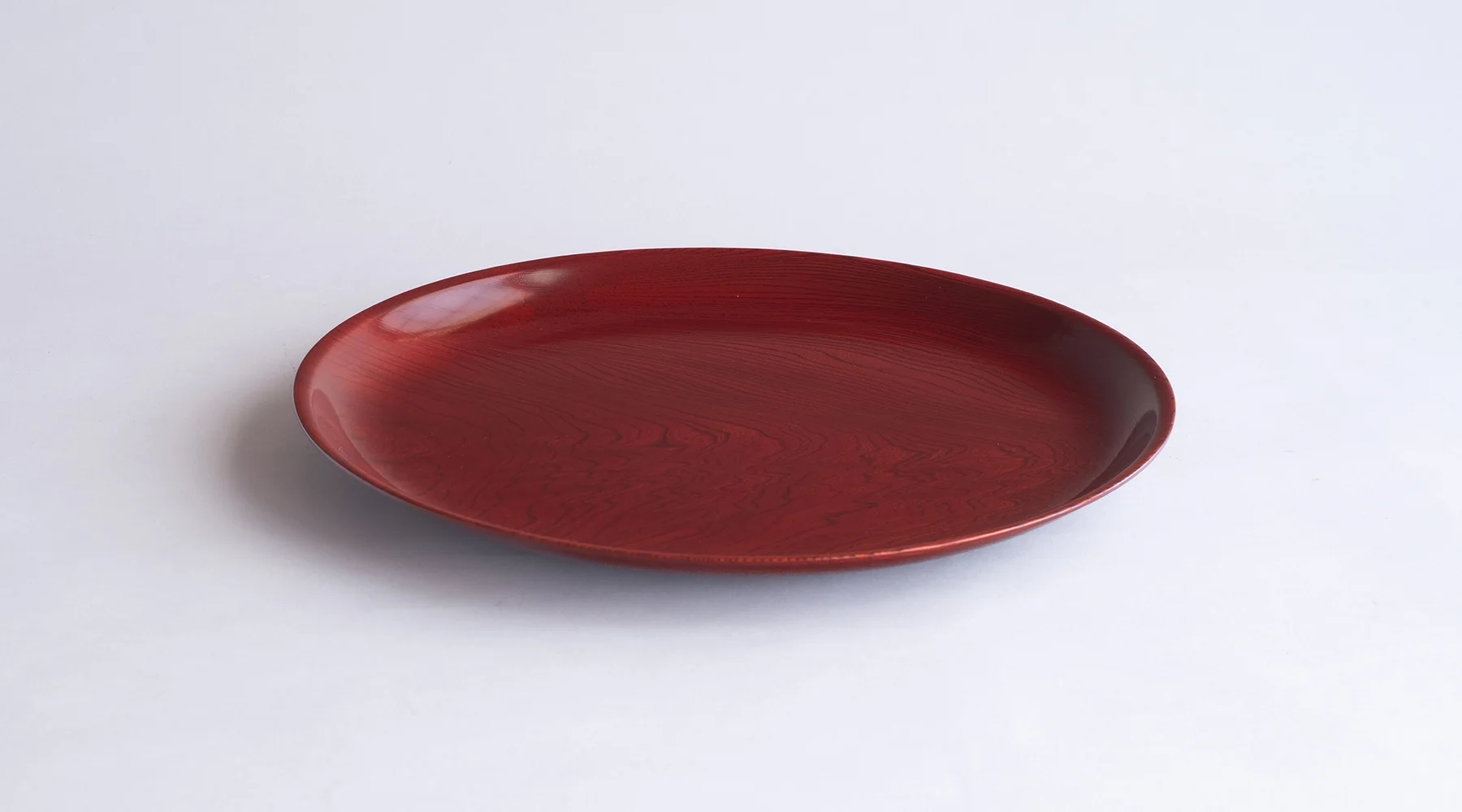
Miyajima woodturning is fundamentally performed using a natural finish that highlights the wood grain. However, in recent years, the technique called "fuki-urushi (wiped lacquer)," in which lacquer is thinly applied, rubbed in, and then wiped off, has become more common in order to create products that are more durable and easier to use. In this lacquer process, Mr. Fujimoto uses vibrant red and purple lacquer, focusing on creating unprecedented forms of expression. "At first, we even received criticism for trying new things. However, applying lacquer makes the wood grain more pronounced, which I believe highlights the appeal of Miyajima woodturning."
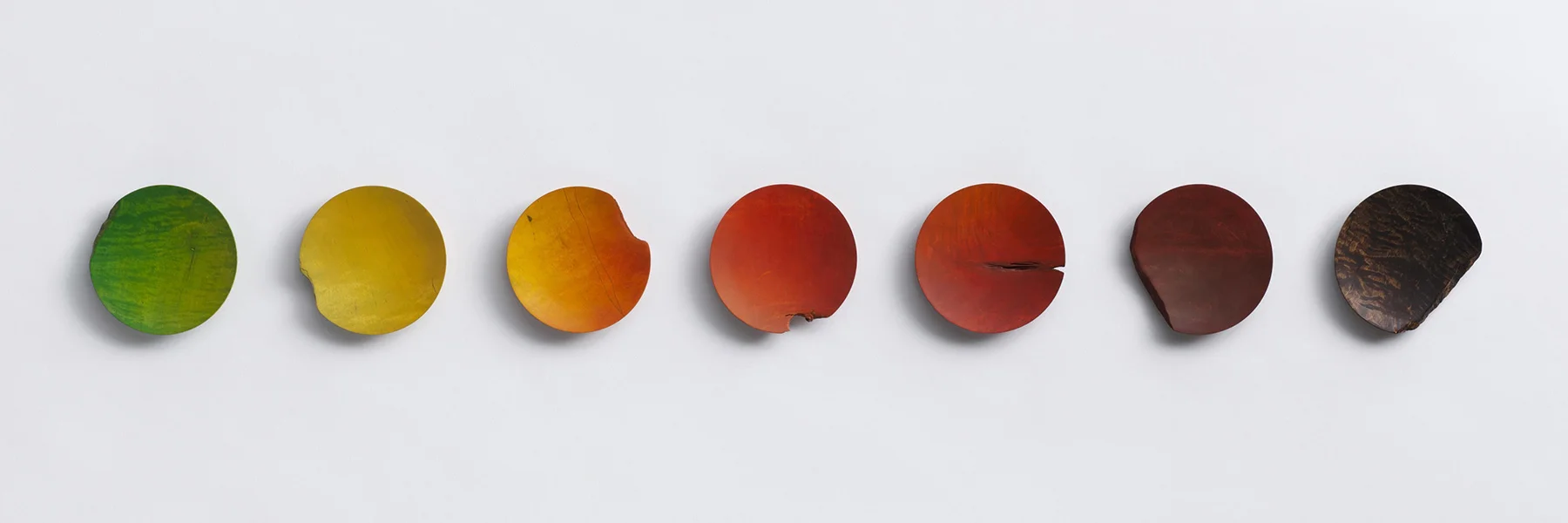
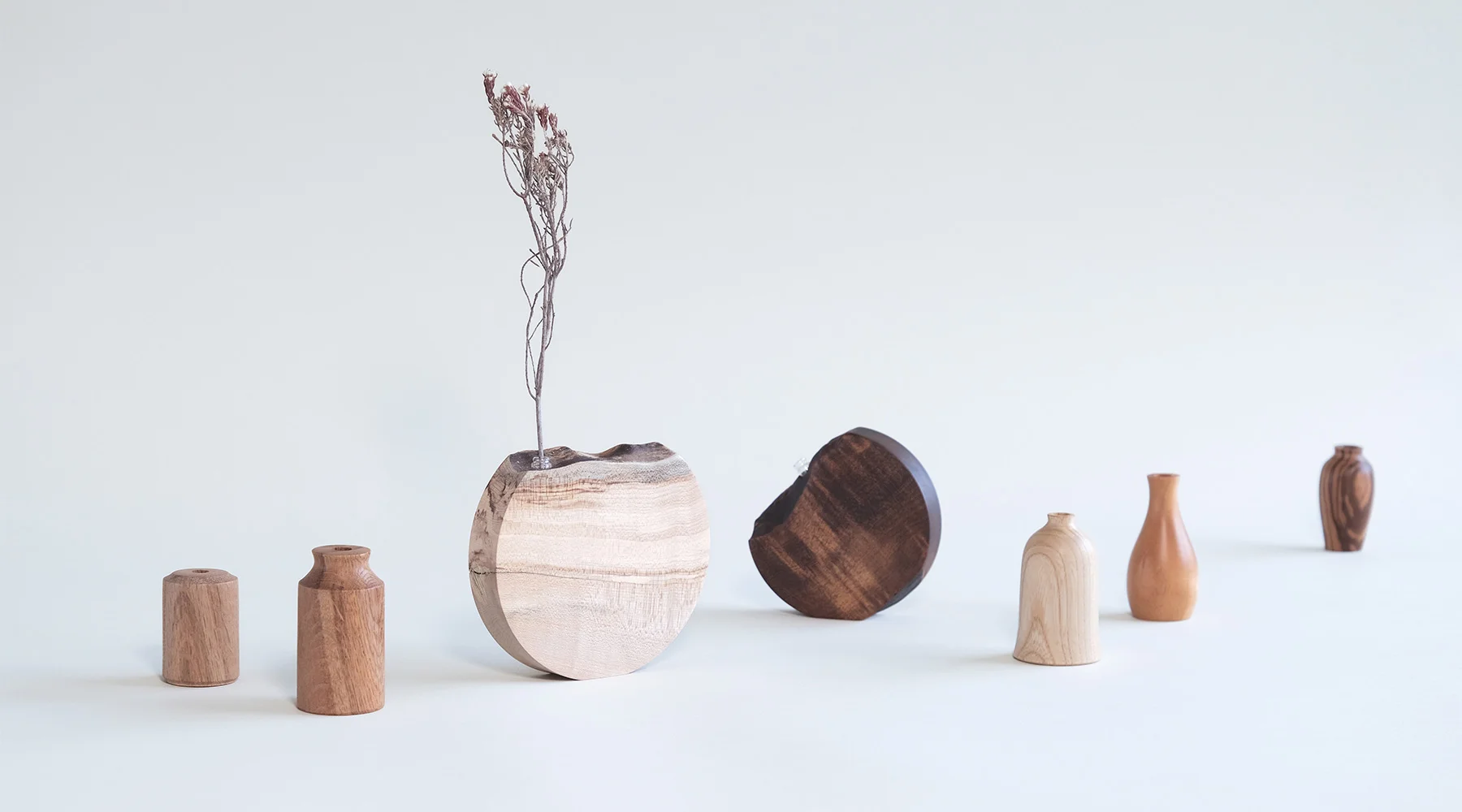
Influenced by Mr. Fujimoto in this way, Mr. Shimomura created a set of seven small plates for his university graduation project, using colored lacquer to express the transition of maple leaves from fresh green to withered leaves. Additionally, although perfectly round shapes are traditionally considered beautiful in woodturning, he intentionally uses wood material that is chipped or knotted from the start, creating items such as clocks and single-flower vases that fit into modern lifestyles. "The fact that it's not a perfect circle, I think, links to the image of the maple leaves and fallen leaves on Miyajima," says Mr. Shimomura.
Of course, Mr. Fujimoto supports these "characteristic expressions that are unique to Mr. Shimomura." "However, it's also important for artisans to possess the skills to quickly and accurately mass-produce traditionally beautiful products. I intend to firmly teach him the basics for that, even after he becomes independent," he adds.
The apprentice can immerse himself in manufacturing in the same space as his master, fully absorbing skills backed by experience. From those irreplaceable moments, traditions are built for the next era.