A residence of Shinto priests, standing amidst modern surroundings,
has supported Itsukushima Shrine.
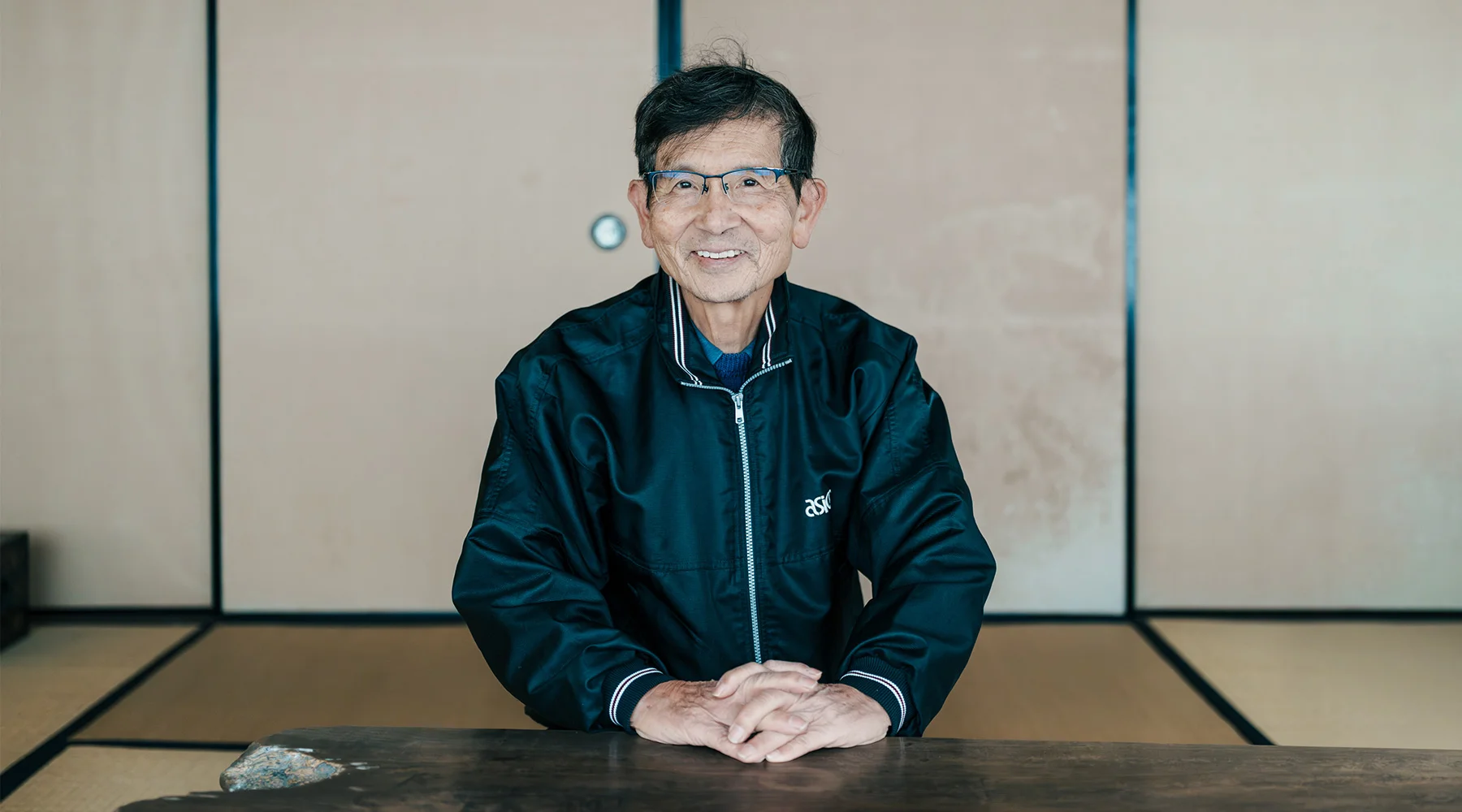
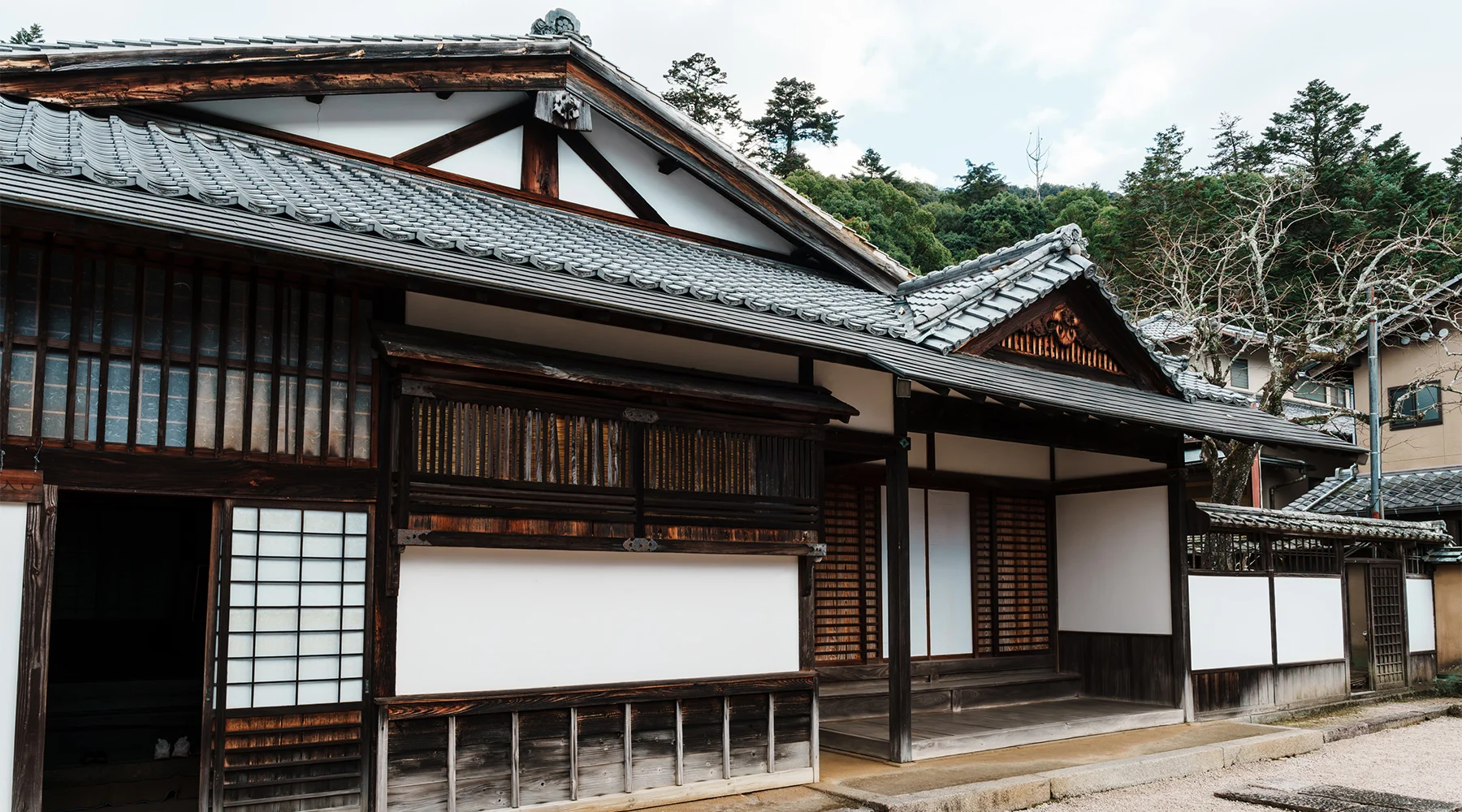
"Takinokoji Alley" is a gently sloping road which leads from the back of Itsukushima Shrine to Daishoin Temple. On this street, which was once the district of residences for Shinto priests, stands the "Hayashi Family Residence," designated as a National Important Cultural Property in 1978. The building is commonly referred to as the "Shokei-Yashiki Residence." It is carefully maintained by the Hayashi Family Residence Preservation Society, which was established by Mr. Norichika Hayashi, who is the head of the household, Mr. Yoichi Desaki and Mrs. Yasuko Desaki, and their younger sister, Mrs. Taeko Ito. We asked them about the history of the residence, which was swayed by the upheavals during the Sengoku period and forced to change its main family during the Edo period, as well as their feelings as persons inheriting a cultural property.
The roots of the Hayashi family can be traced back to the founding of Itsukushima Shrine.
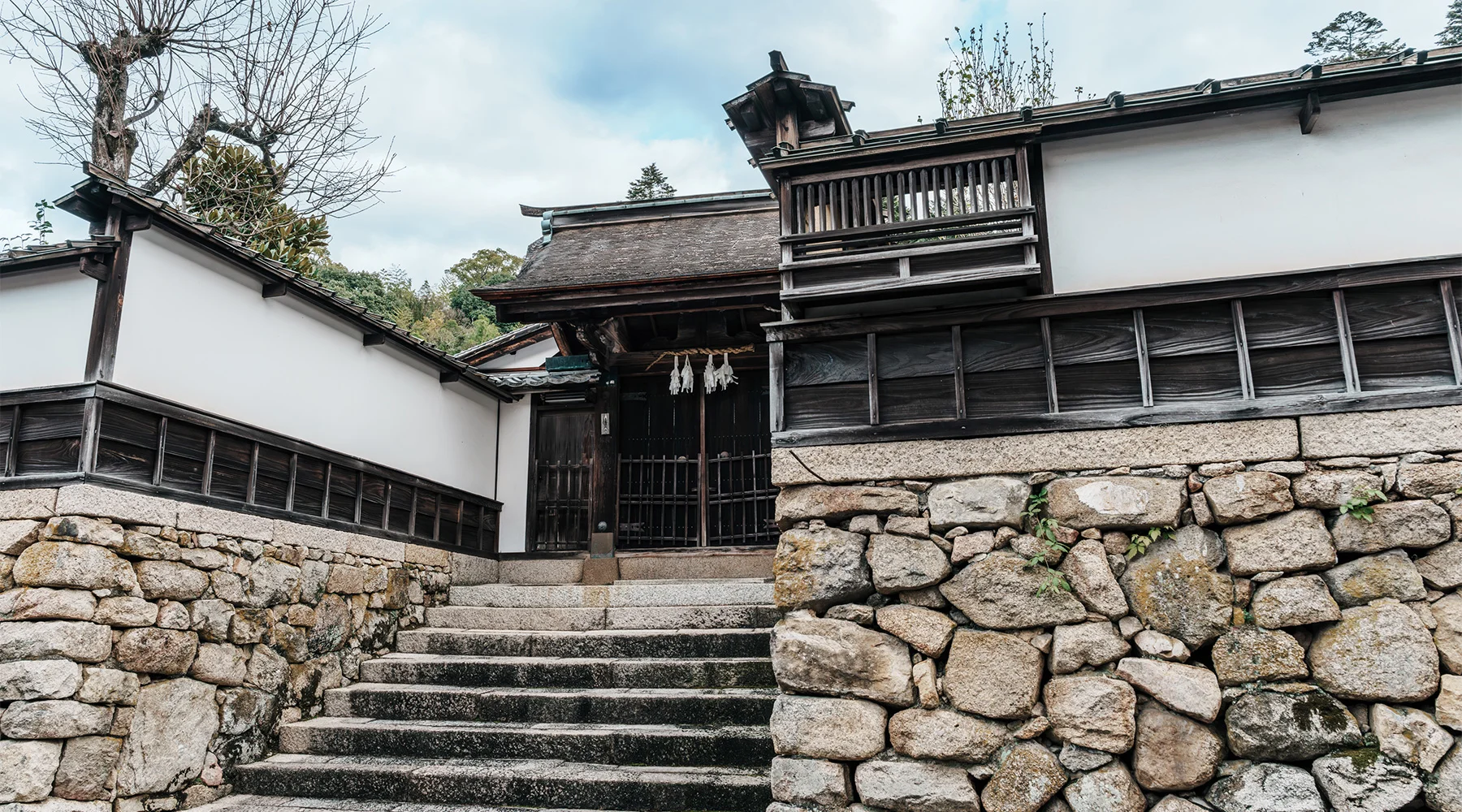
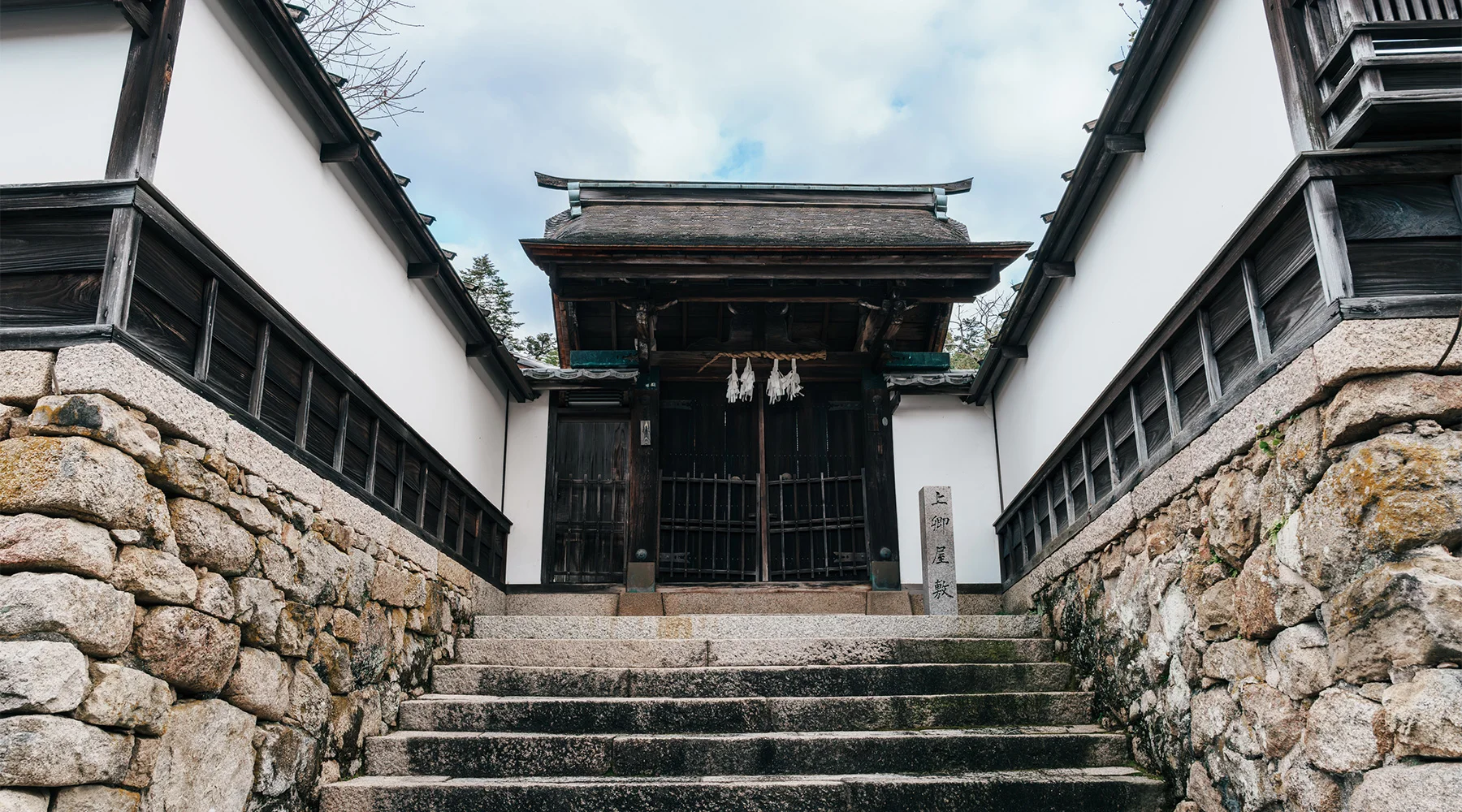
As we climbed the stone steps leading to the front gate, Mr. Yoichi Desaki and Mrs. Yasuko Desaki opened the wicket door and greeted us. Mrs. Yasuko Desaki's birth name is Hayashi. She is a direct descendant of the "Hayashi Family Residence." At Itsukushima Shrine, there are three prestigious families known as the "Miyajima Sanke" who have served as Shinto priests since long ago: the Tanamori, the Shokei, and the Monomoshi. Of these, the Hayashi family belongs to the lineage that held the "Shokei position."
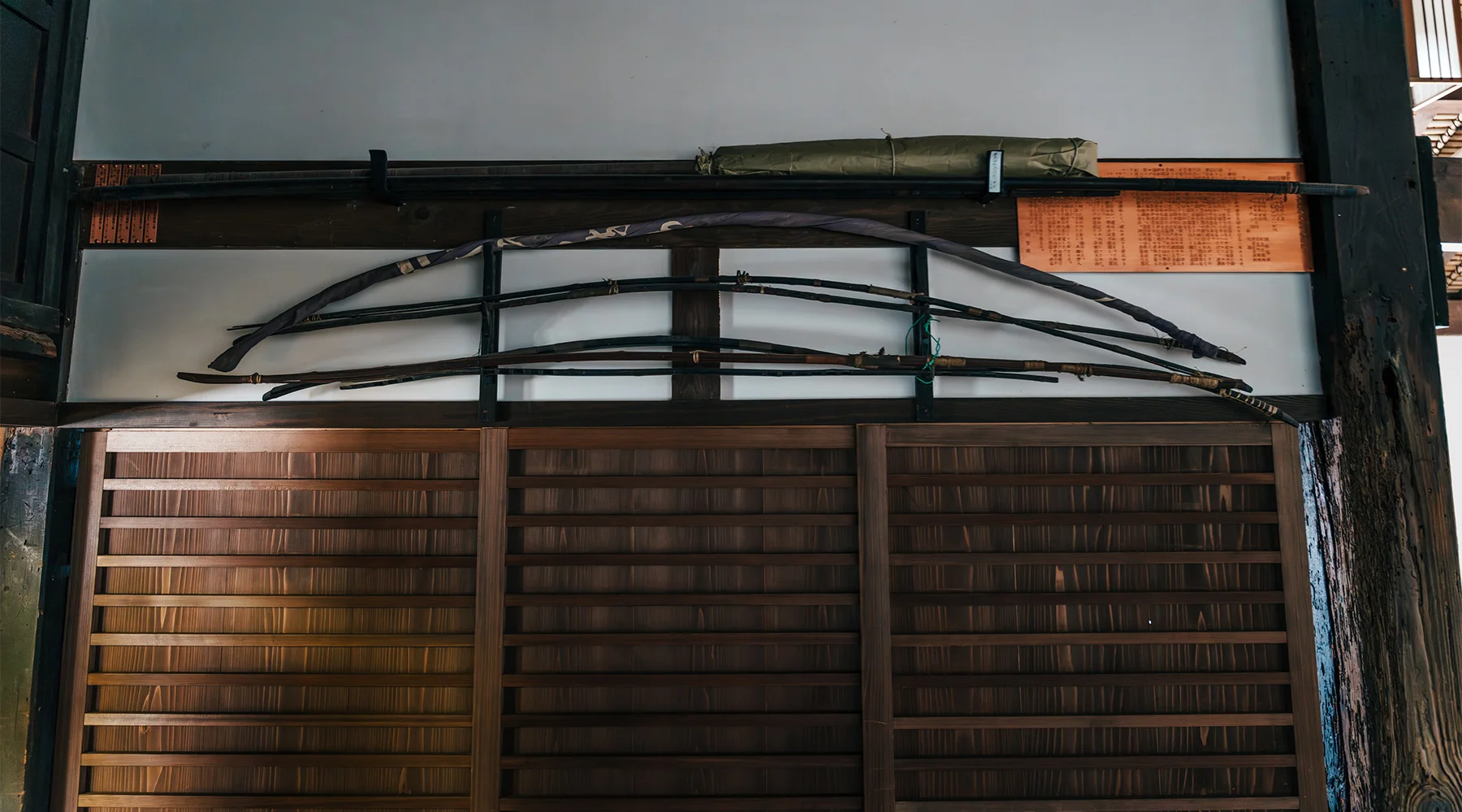
"The Shokei had the role of welcoming imperial envoys dispatched by the Emperor and conducting religious ceremonies. They also had the duty of acting as a proxy worshipper at Itsukushima Shrine, and until the Edo period, they served as the chief priest of Omoto Shrine as well," says Mr. Desaki. Omoto Shrine holds an event called "Momotesai Ceremony" in January. It is said that generations of the family heads have been responsible for conducting the Shinto rituals at this festival and shooting 200 arrows.
The founder of the Hayashi family is Saeki no Kuramoto, who was believed to be descended from Oyamatsumi no Mikoto. It is said he founded Itsukushima Shrine in 593. Afterwards, the position of chief priest at Itsukushima Shrine was passed down in the Saeki clan, but after the fall of the Taira clan, the era of the Fujiwara clan began by order of the Kamakura shogunate. The immediate vassal who went to Hiroshima, Fujiwara Chikazane, was appointed as the chief priest and also assigned as the governor of Aki Province. The second son of Chikazane became the adopted son of the Shokei family and assumed the position of Shokei acting chief priest.
During the Sengoku period, the Fujiwara clan resided at Sakurao Castle, located in modern-day Hatsukaichi City. In 1541, the Fujiwara clan was attacked by Ouchi Yoshitaka, and they set fire to the castle and committed suicide. The Shokei residence, which stood beside Sakurao Castle, was completely destroyed by the fire, resulting in the loss of valuable books and other materials related to the Shokei. Afterwards, the Shokei moved to the Ozuka area (modern-day Asaminami Ward in Hiroshima City), which was once part of the Fujiwara clan's territory. "The family settled on Miyajima during the era when Mori Motonari unified the Chugoku region. It seems that, until then, they would come to the island by boat from the opposite shore for each ritual," says Mr. Desaki.
Overcoming crises to pass on the Shokei position.
The "Shokei position" is a prestigious office that has existed since the Nara period, and the Hayashi family has served as the "acting chief priest Shokei" for generations.
"'Acting chief priest' refers to the proxy of a Shinto chief priest. From the Kamakura period to the Sengoku period, the families of Shinto priests began to arm themselves and focus on military activities in order to protect their own territories. Therefore, it is believed that this family came to carry out religious and festival ceremonies."
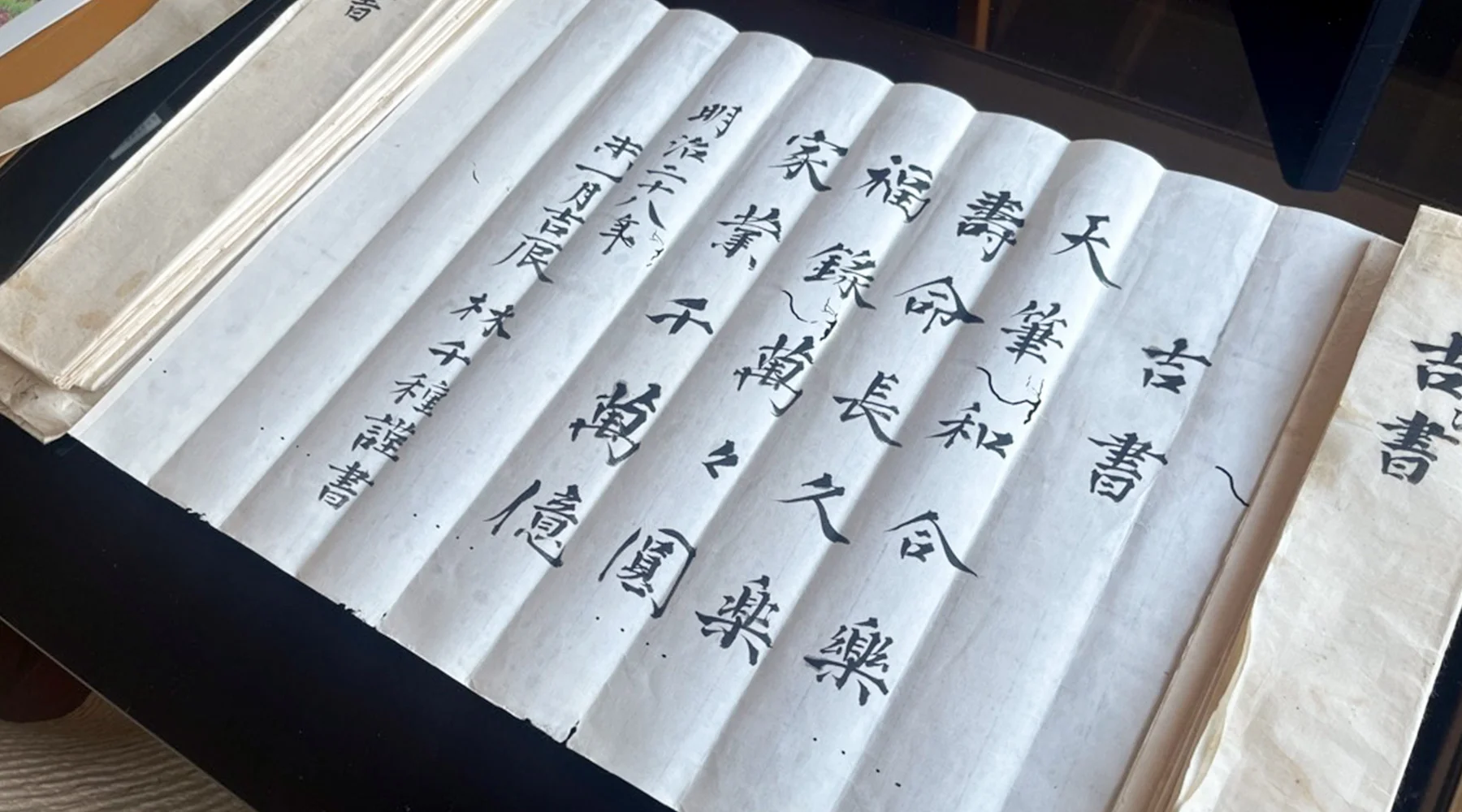
Furthermore, it is said that the family name became "Hayashi" because, in the mid-Edo period, the bloodline of the "Miyake" family, who served as the Shokei position, faced extinction. The Asano clan, which served as the lord of the Hiroshima Domain at that time, invited Hayashi no Ason Moriyuki, a member of the priestly family of Atsuta Shrine, to serve as the "Kengyo" administrative official of Itsukushima Shrine, and later appointed him as the 32nd Shokei position. From this point onward, the family name was changed to "Hayashi," and it has continued up to the present 40th generation.
"My great-grandfather, who was the 37th generation, inherited the Shokei position at just 10 months old in 1841," says Mrs. Desaki as she traces through the documents. He lost his father shortly after birth, and his brothers had assumed the roles of chief priest at Omoto Shrine and shrine administrator at Itsukushima Shrine, respectively. Therefore, it must have been a difficult choice made to ensure that the Shokei position did not die out.
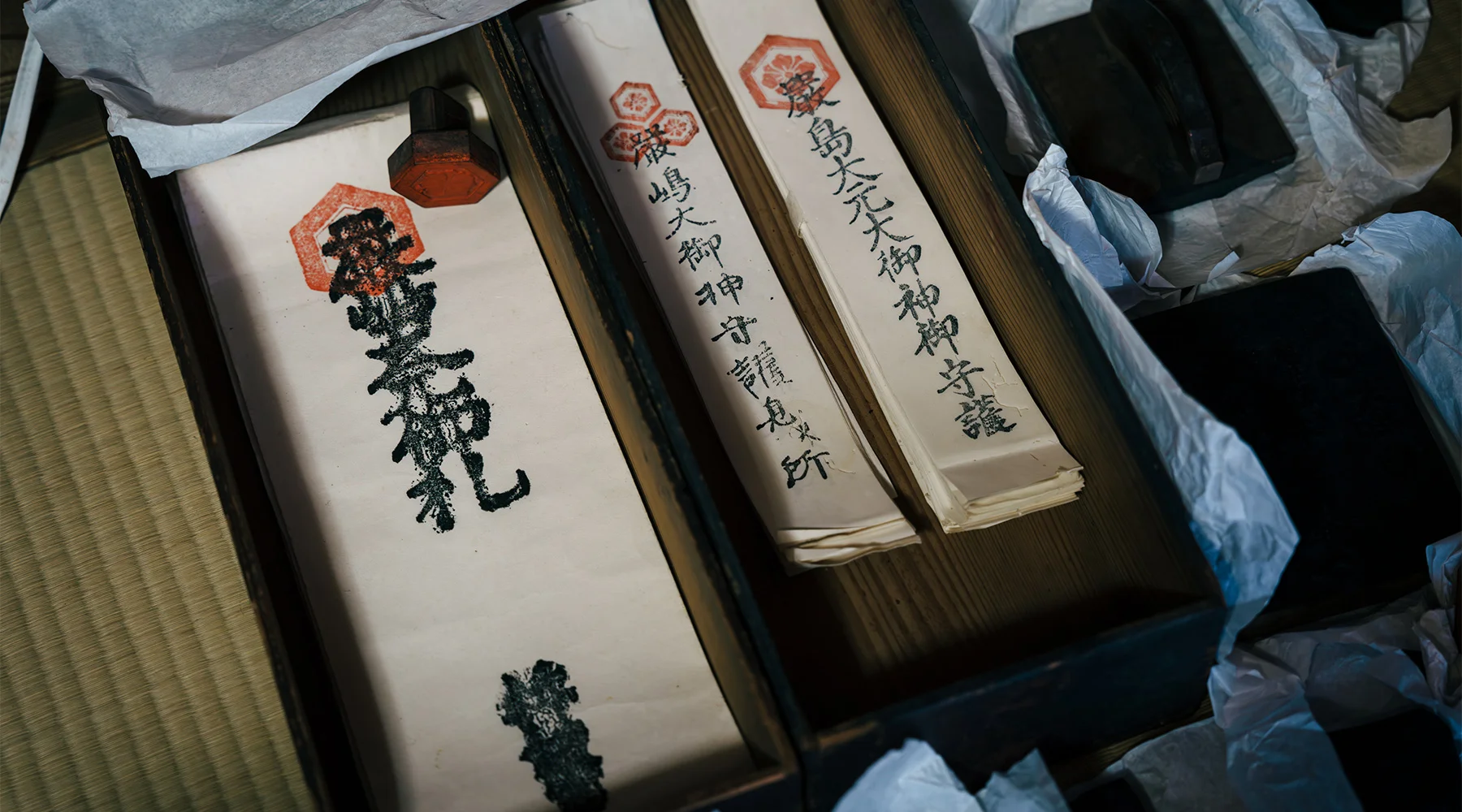
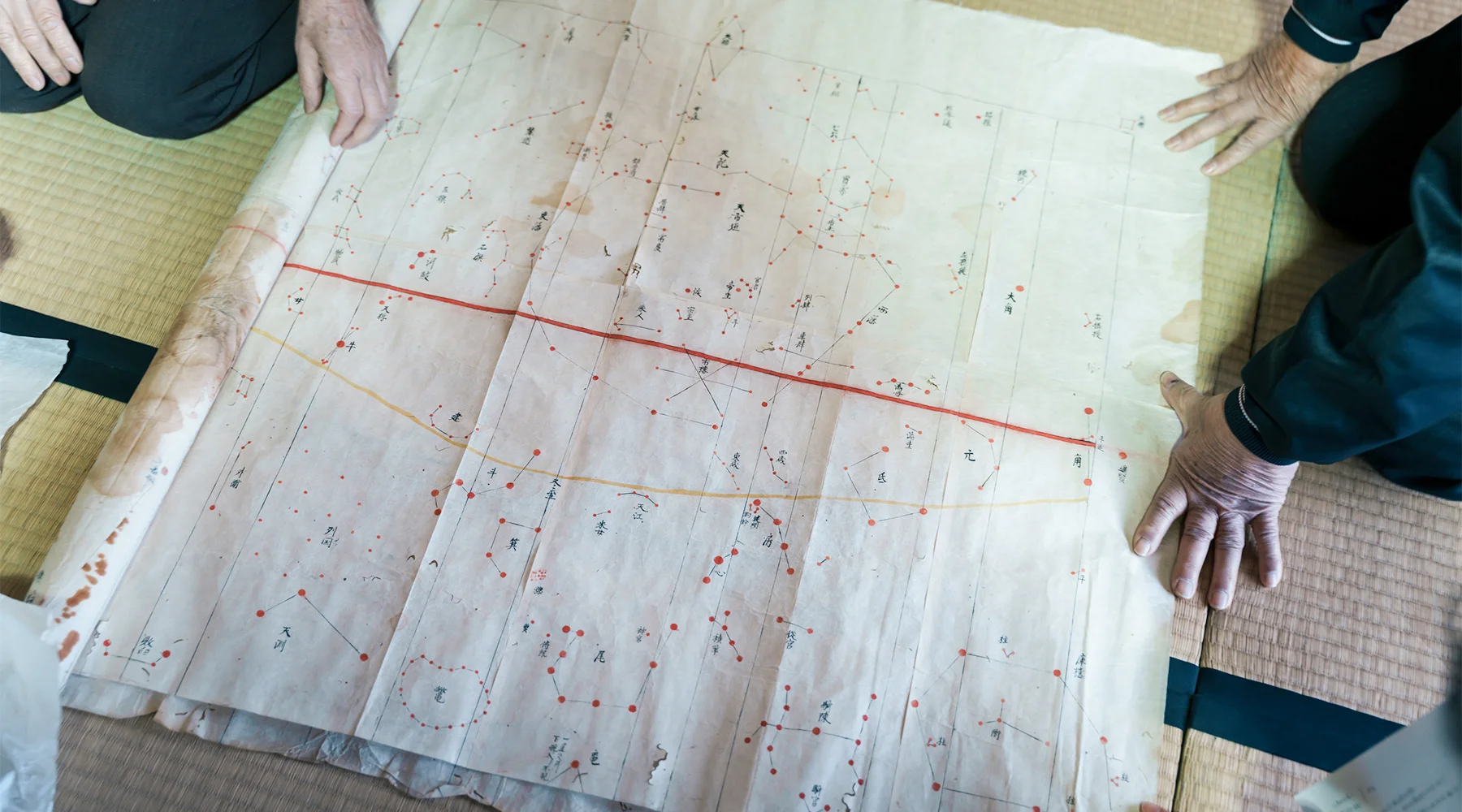
As we listened, we realized that the Shokei-Yashiki Residence has faced many crises. Those include when the residence near Sakurao Castle was completely destroyed in a fire, when the Miyake family line ended and the Hayashi family took over, and when the 37th successor inherited the position before his first birthday. They say that they now feel strongly the weight of having overcome difficulties to keep the family going. "I got married and left Miyajima, and it had actually been 40 years before I returned to the residence here. During that time, my father passed away suddenly, so I was unable to ask him about the detailed history. So, I began reading the old documents, and through that process, I once again realized the value of what I inherited from my ancestors."
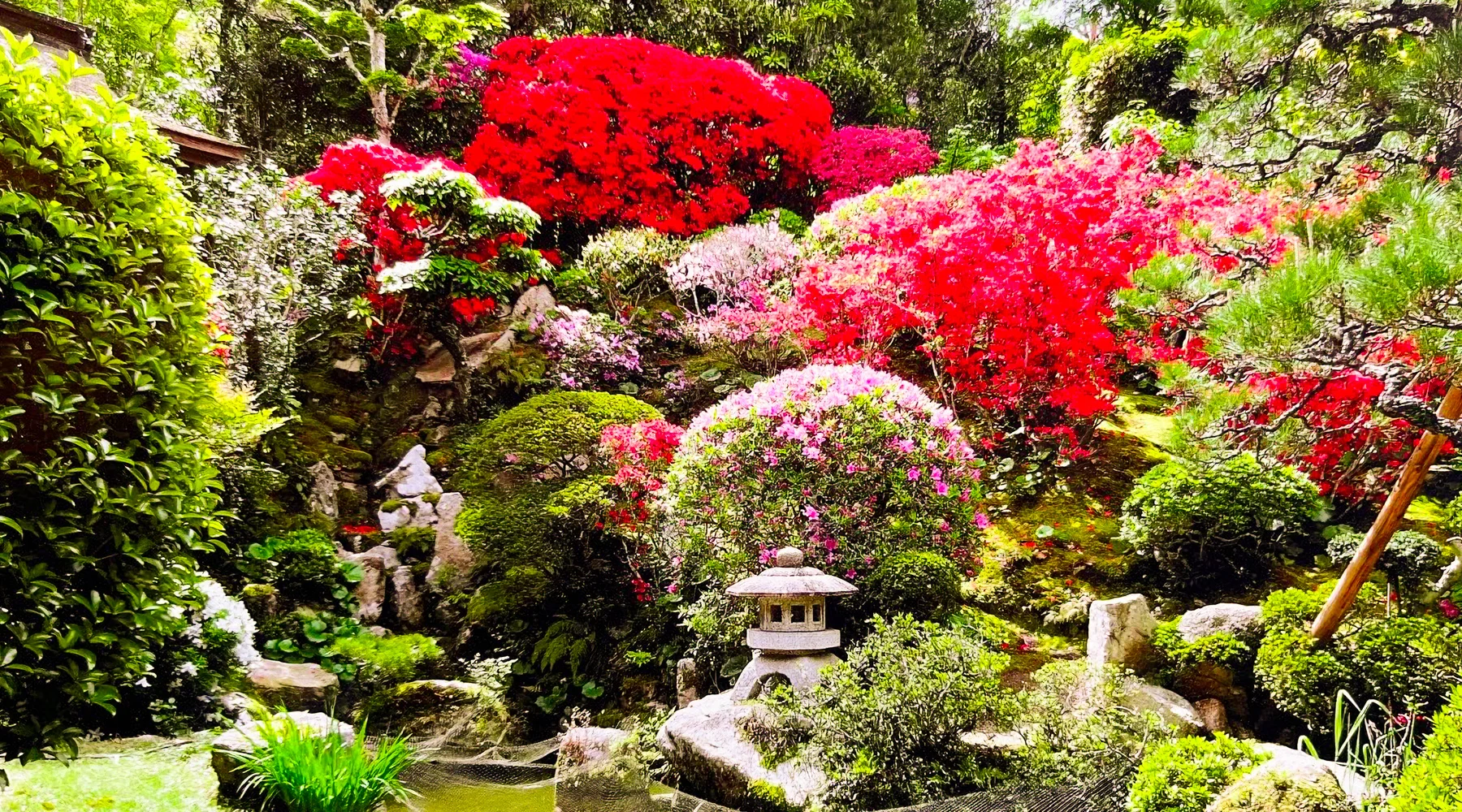
Both island residents and visitors, with a love for this place.
There are hardly any detailed records left in the Hayashi family covering from 1541, when the residence near Sakurao Castle was destroyed in a fire, to the early 1700s when the Hayashi family assumed the Shokei position. There are also other periods for which only fragmentary events are known. However, including those as well, Mr. and Mrs. Desaki say, "History is something that will disappear if it isn't passed on." That is why they open the mansion to those who are interested by reservation, and also provide guided tours and explanations upon request.
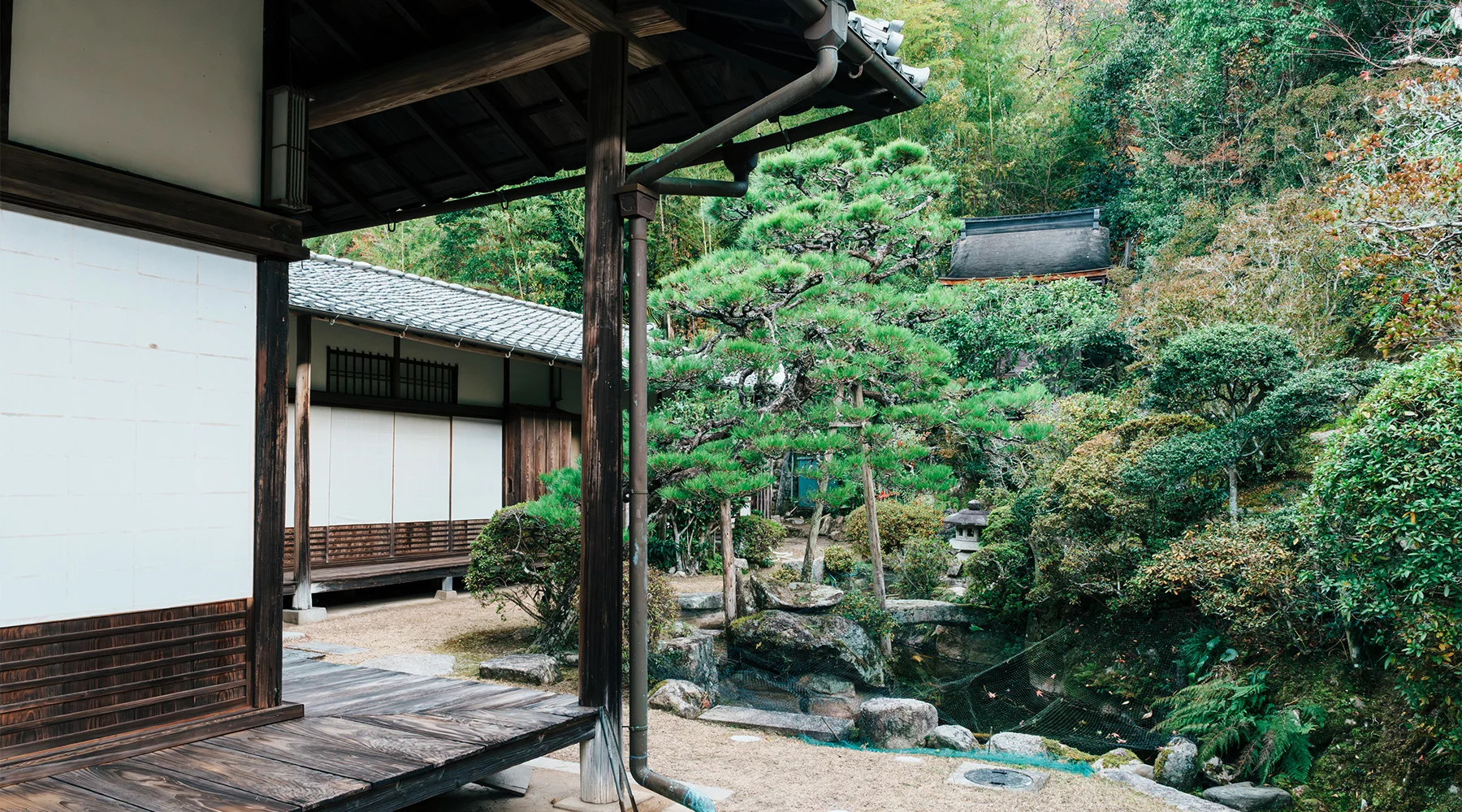
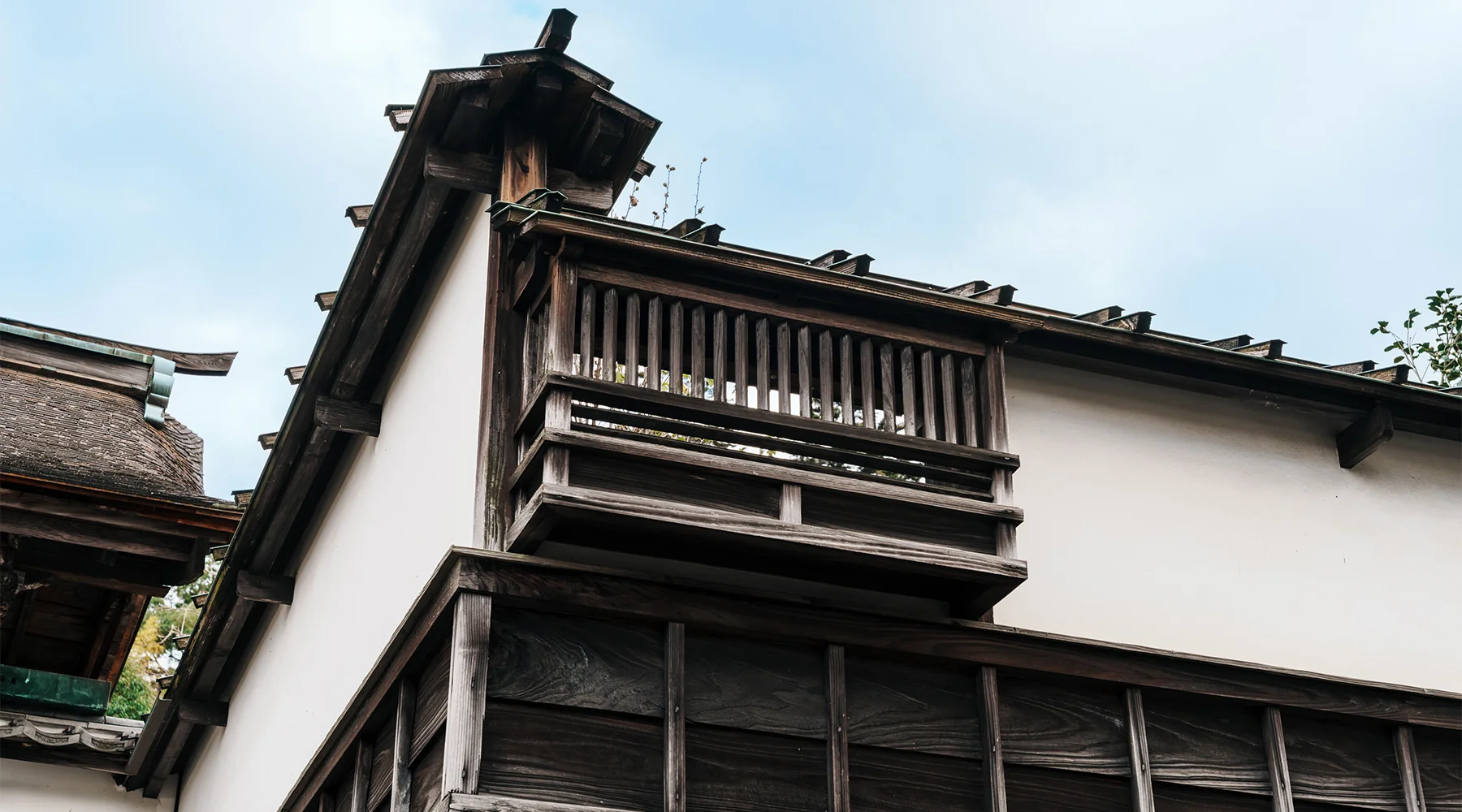
As a distinctive design feature of the Shokei-Yashiki Residence, they introduced to us a bay window called "Sasarako-shitami" installed in a corner of the white wall near the front gate. Built on a hill, the Hayashi Family Residence has a very clear view of the "Sori-bashi (arched bridge)" at Itsukushima Shrine, which is used for festivals and other ceremonies. Therefore, during the New Year's holiday and during the rituals of the "Hatsusaru Festival," they say they have watched over the procession and exchanged signals to coordinate preparations with other Shinto priests from this window.
While that alone conveys how valuable the Shokei-Yashiki Residence is as a tourism resource, Mrs. Desaki says, "I feel there are aspects that conflict between using the residence for tourism and preserving it as a National Important Cultural Property."
The change to a reservation-only system for tours was prompted by problems with tourists' manners. On the other hand, subsidies from the national and local governments for the maintenance and management of the residence are limited in purposes, such as for renovations, and many day-to-day costs have to be paid out of their pocket. Because staff members are limited, it is difficult to attend to each and every tourist, and this is not a situation where it can simply be leveraged for tourism.
"We hope that tourists visit here with a sense of love for Miyajima. That's because I believe that if the love for this island is stronger, things like littering will stop. Of course, I believe that we who live on Miyajima must also continue to cherish our hometown."
The nature of religion in Japan has changed since the Meiji Restoration, and the role of Shinto priests has also changed. However, the Hayashi Family Residence retains a carefully maintained house and valuable materials related to the Shokei position. Their historical and cultural value stands on the many consistent efforts that have been made, generation after generation to this day, by descendants of the Shokei family that has lasted for 40 generations and will endure longer.